
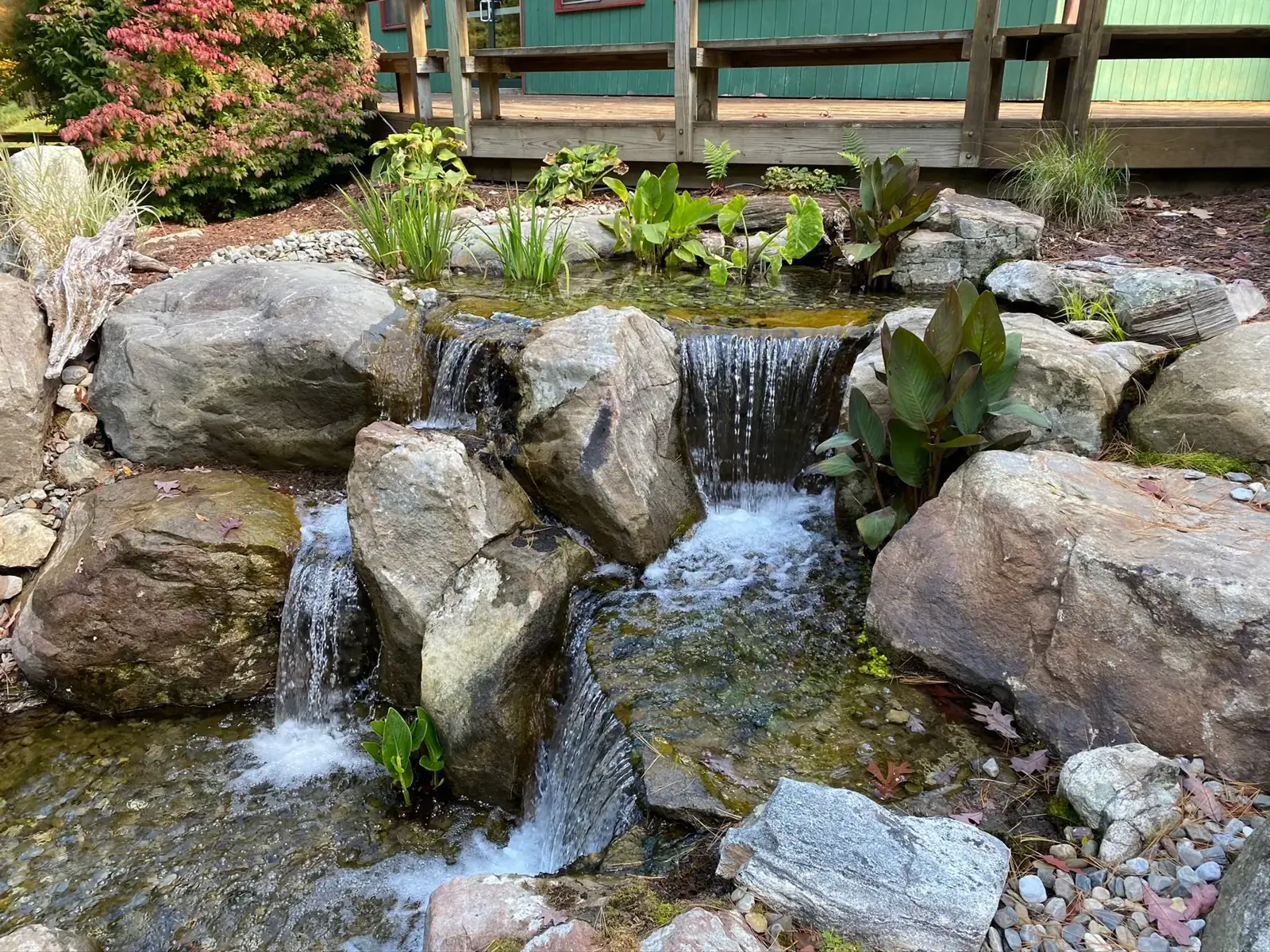
All the waterfall. None of the pond.
The sound, the movement and the stone, with no standing water anywhere. The right answer for small yards, young families and anyone who wants the effect without the fish.
The water is there. You just cannot see it.
A pondless waterfall runs on a hidden reservoir instead of an open pond.
We excavate a basin, line it, and fill it with washed stone. The water lives in the gaps between that stone, under a load-bearing grate, where nothing can fall in. A pump sits in that reservoir and pushes water to the top of the run. It comes back down over the rock and disappears into the gravel at the bottom.
You get the sound of moving water and a stone feature that looks like it was always there. What you do not get is open water, a fish load, or a surface that collects leaves.
It is the feature we recommend most often for front yards, for families with toddlers, and for anyone whose yard is too small to give a pond the room it needs.
- Standing water
- None, the reservoir sits under stone
- Typical run
- 6 to 20 ft of stream and falls
- Build time
- 3 to 7 working days on site
- Filtration
- Not required, no fish load
- Weekly upkeep
- Top off for evaporation
- Winter
- Shut down and drain, or run through
- Typical range
- $6,000 to $12,000
- Best for
- Small yards, front yards, young families
Six parts. One loop. No chemicals.
Water leaves through the skimmer, gets pushed underground to the biological filter, and comes back down the waterfall. It never stops moving. Here is the whole system in cross-section.
- 01SkimmerPulls debris off the surface
- 02Living waterPlants, fish, clear water
- 03BioFalls filterBiological filtration
- 04WaterfallAeration and sound
- 05Rock and gravelWhere the bacteria live
- 06Return linePump feeds the falls
Cross-section of a Scott Anderson Design ecosystem pond. Drawn to the same spec we build to.
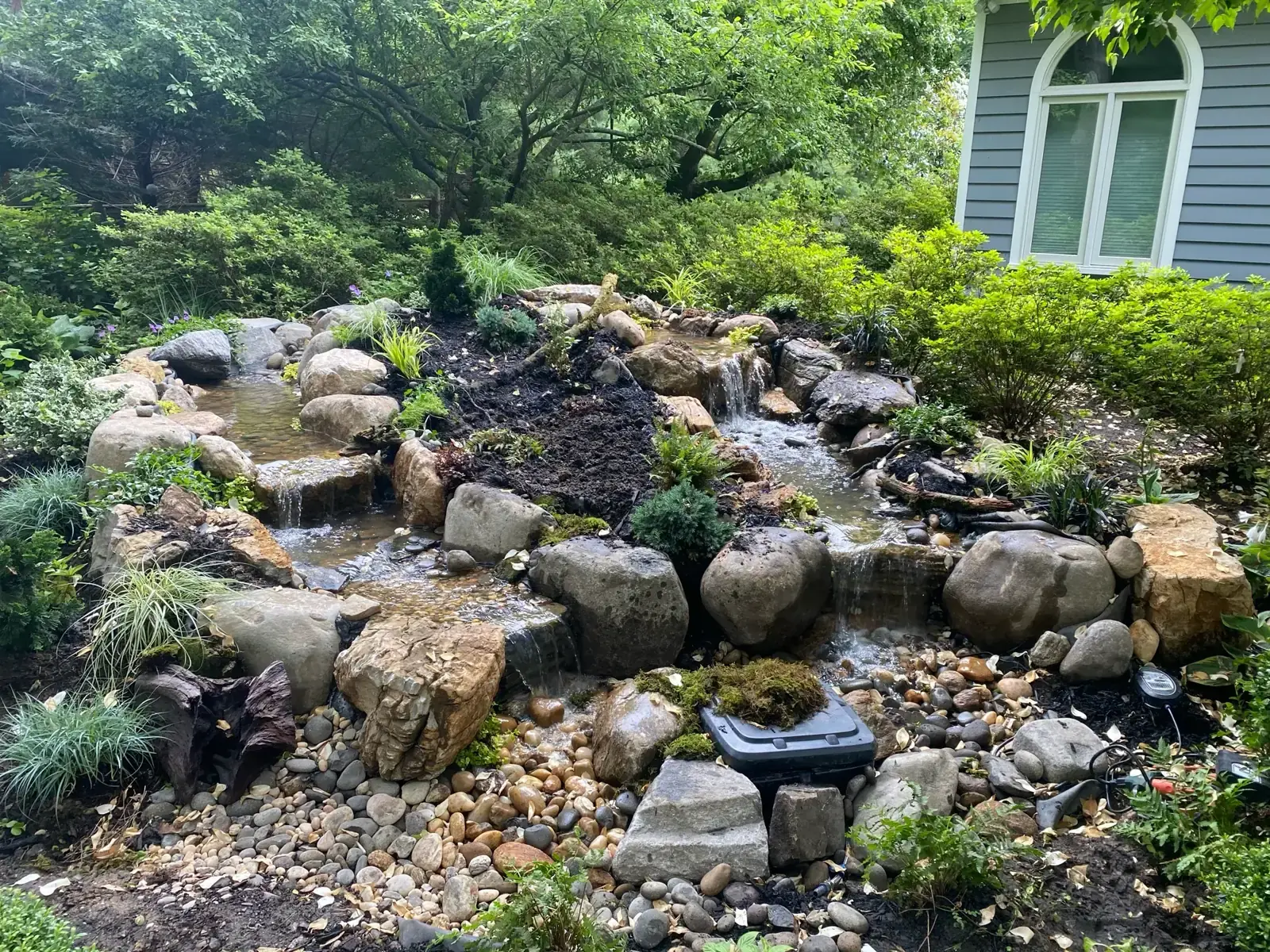
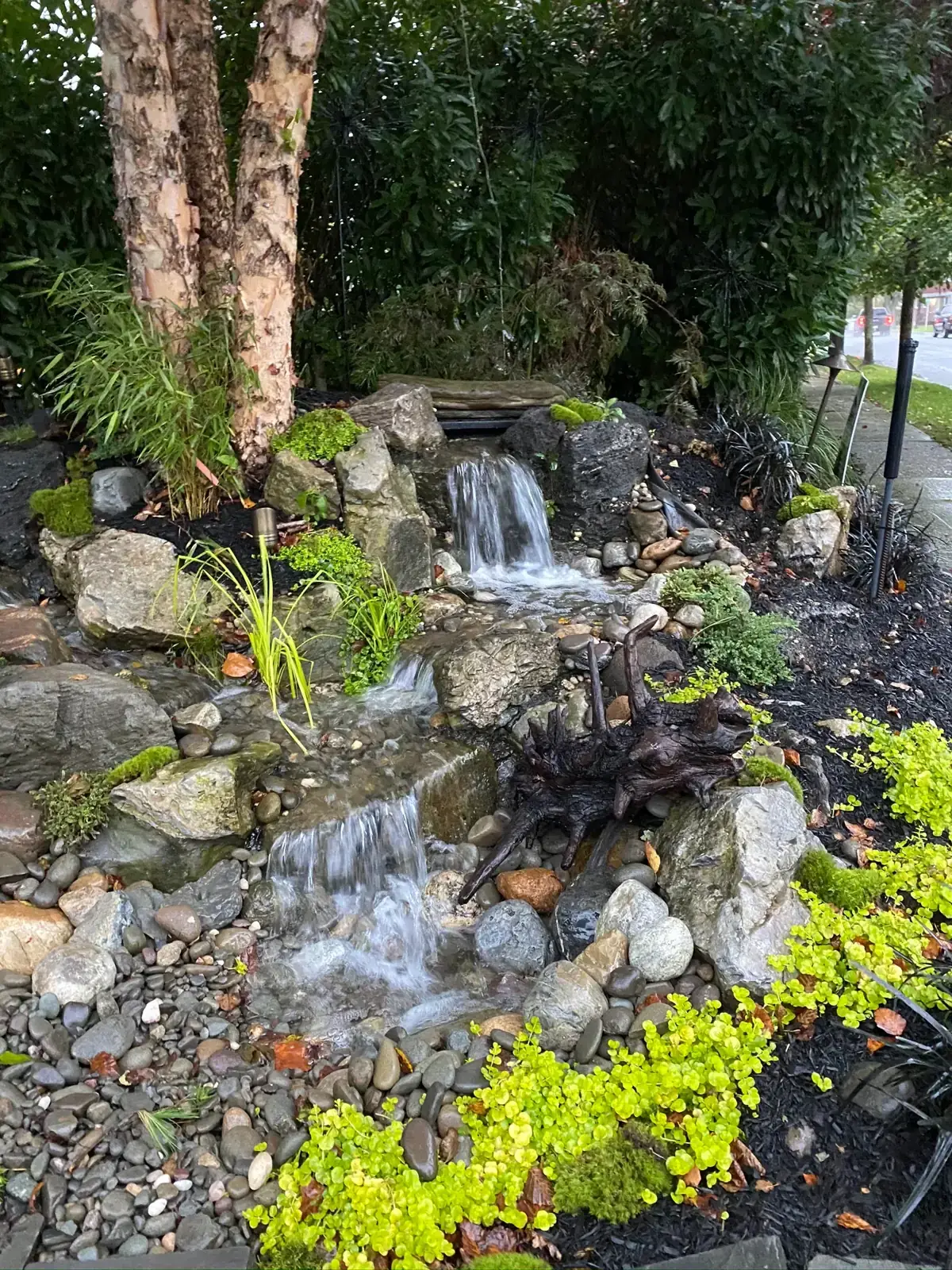
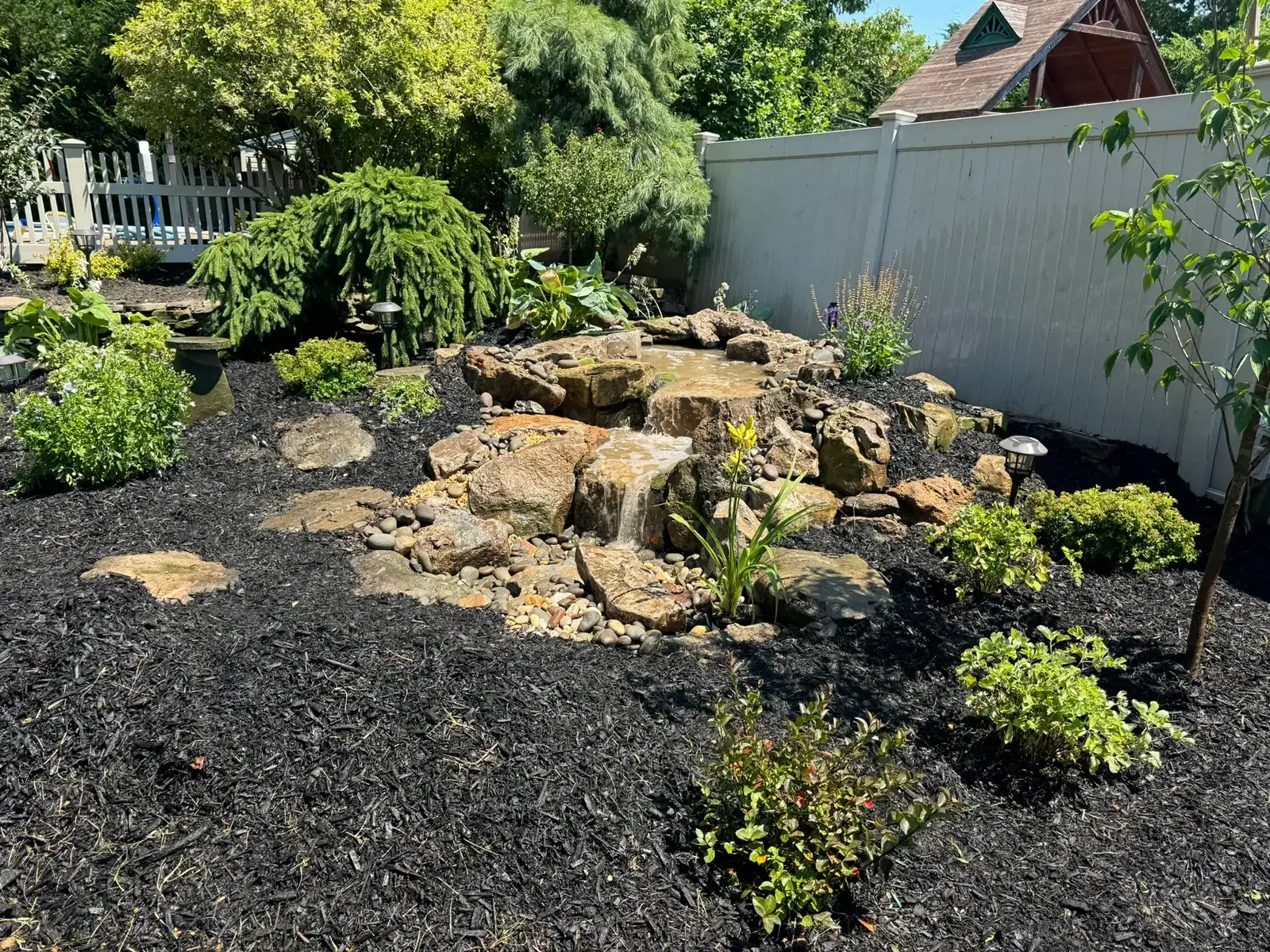
Pondless waterfalls we have built.
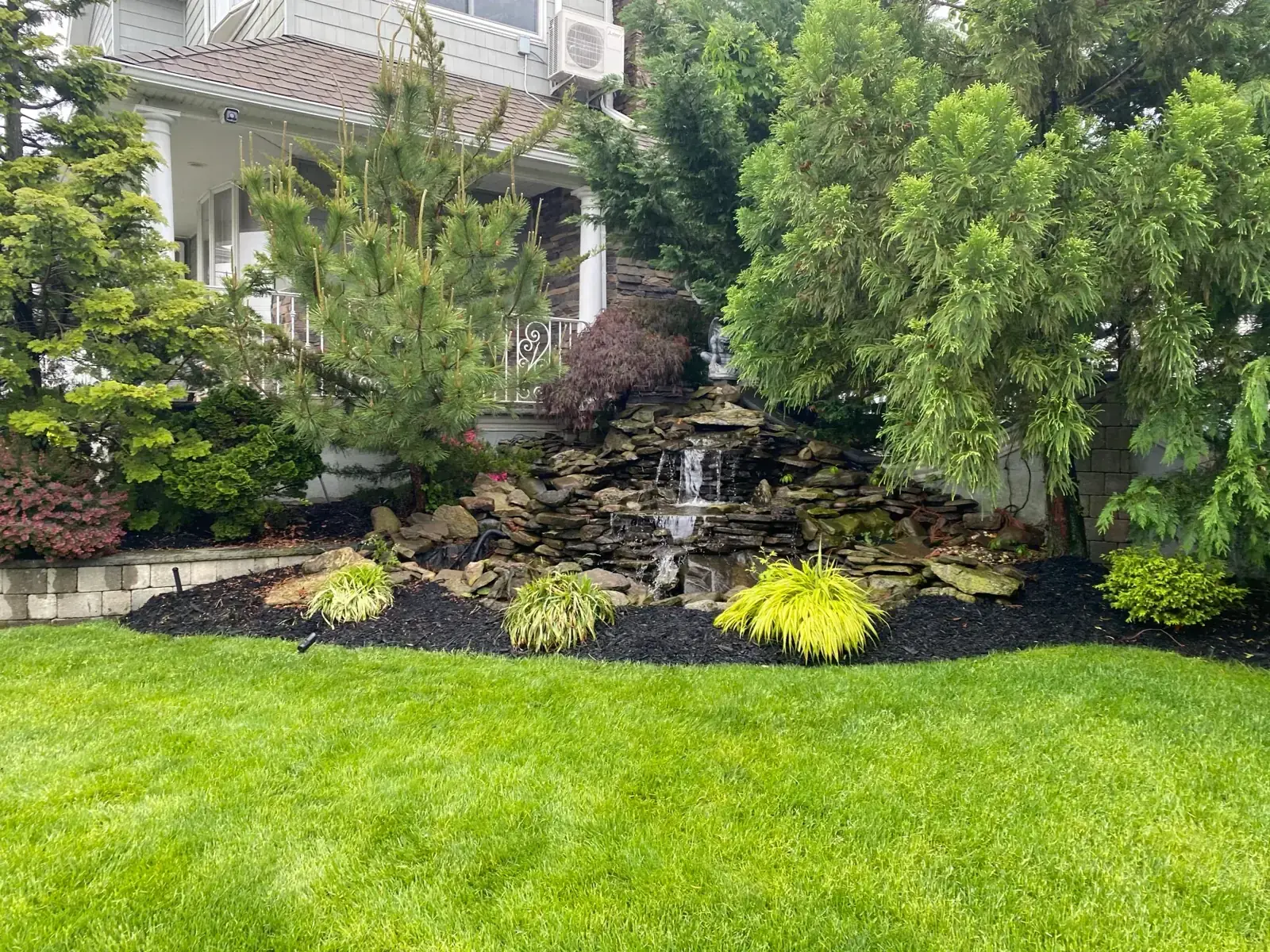
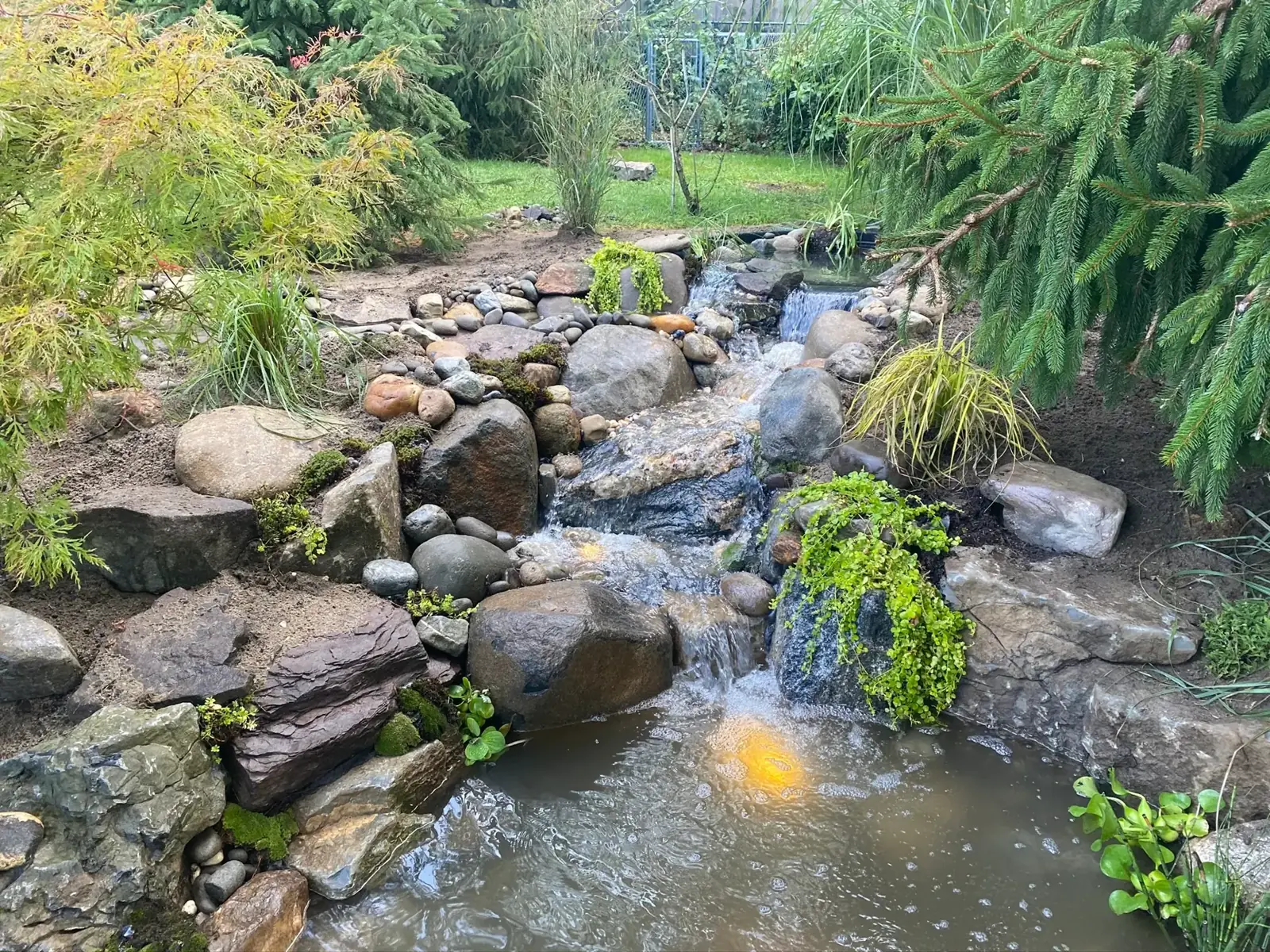
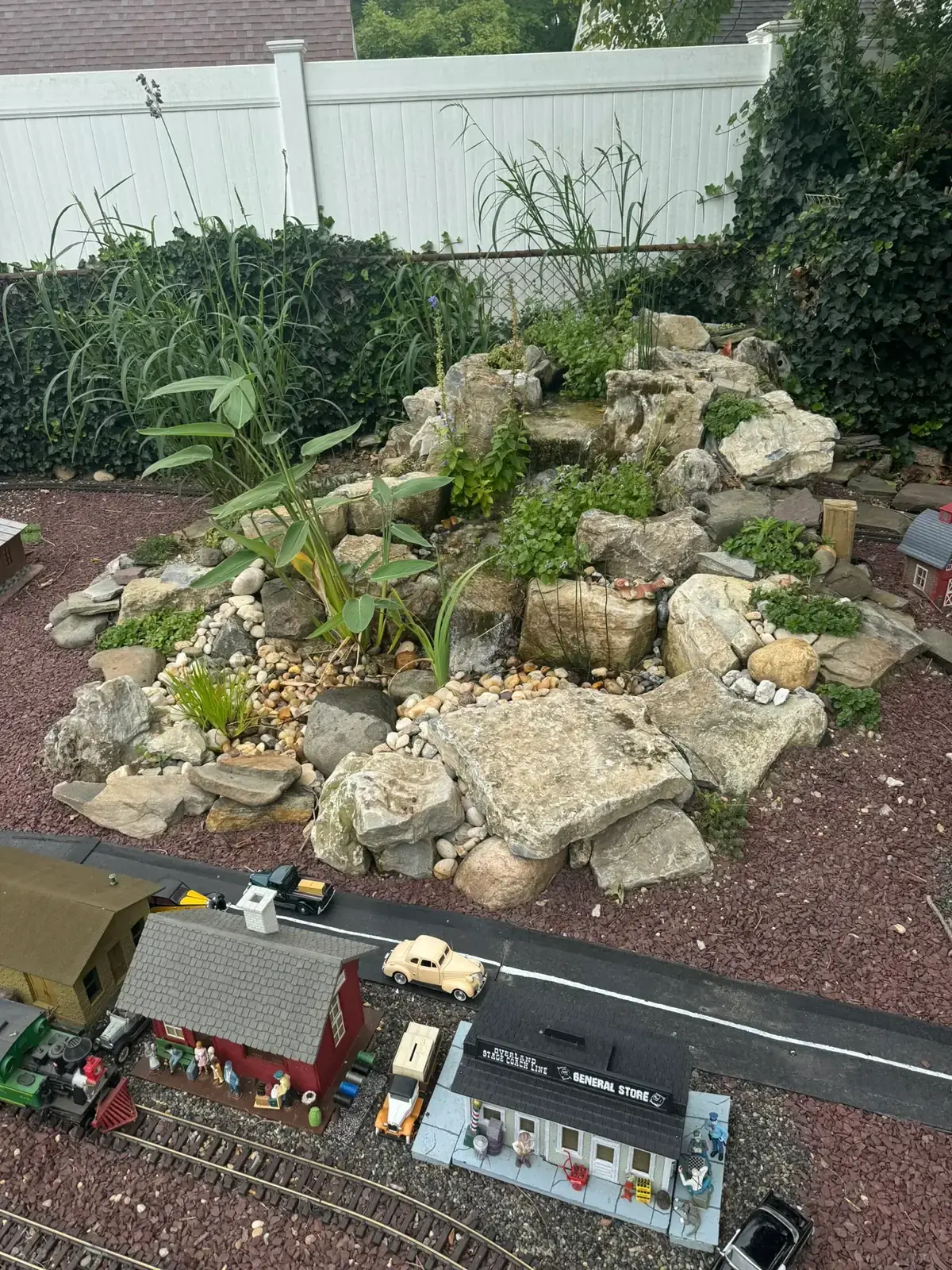
The Shelton train garden.
A homeowner wanted a working outdoor model railroad and a waterfall that read as the mountain behind it. Grade, scale and sightlines all had to serve the trains, not the water. It is the most specific brief we have been given and it is still one of our favourite builds.
Published, not pried out of us.
Length of run, drop, stone selection and access move the number. These are the honest ranges.
Small pondless waterfall
Short run, single drop, compact reservoir
Standard pondless waterfall
Multi-drop run with a stream section
Large stream and falls
Long run, heavy stone, significant grade
Annual service
Reservoir clean, pump check, restart
Is it safe with small children?
Do I still need a pump running all the time?
How much water does it lose?
Can I add a pond to it later?
What does it look like in winter?
How long does it take?
Tell us about the yard.
We will tell you what is possible in it.
Every project starts the same way: Scott walks the property, listens, and sketches. No pressure, no template. Consultations across Nassau County are free.