
Whether you're planning your first major landscaping project or looking to refresh an established yard, the decisions you make early have the biggest impact on the final result. A well-landscaped property doesn't just look better, it functions better. Thoughtfully designed outdoor spaces increase your home's value, extend your living area, and create a more enjoyable daily environment.
Here are the lessons we've learned from twenty-three years of designing and building landscapes across Nassau County and Long Island.
Start With a Plan, Not Plants
The most common mistake residential homeowners make is buying plants before designing. It's tempting to walk into a nursery in spring and come home with armfuls of color, but plants purchased without a plan rarely end up in the right places. Before spending a dollar, walk your property at different times of day and note where sunlight hits, where water pools, where views are good, and where privacy is lacking. That observation informs everything else.
Think About the Property as a Whole
The biggest mistake in residential landscaping is treating different parts of the property as unrelated. The front yard, driveway approach, side yards, and backyard all contribute to the overall impression of the property. A cohesive design uses consistent plant palettes, materials, and themes to tie these spaces together rather than letting each area feel like a separate project.
Work With Your Terrain
Long Island properties vary enormously: flat lots on the south shore, sloped terrain in the north shore hills, sandy soil, clay, hardpan. Good landscape design works with the land's natural character rather than fighting it. A naturally low area can become a rain garden or the home for a water feature. A slope becomes an opportunity for a terraced garden or retaining wall. Understanding your site's existing conditions is the foundation of any design that will thrive long-term.
Choose Plants With Long Island's Climate in Mind
Nassau County is in USDA hardiness zones 7a and 7b. This means we can grow a wide range of plant material, but winters are real and summers are hot and humid. When selecting plants, consider mature size, not just what they look like in a pot, along with disease resistance and how they'll perform through our seasons. Native plants such as native grasses, coneflowers, serviceberry and inkberry are particularly resilient because they evolved here.
Invest in a Strong Entry
The front entry is the first thing guests and neighbors see. Even a modest investment in foundation planting, a defined walkway, and proper lighting can transform a property's curb appeal dramatically. Evergreen structure plants provide year-round presence, while flowering perennials add seasonal interest. Specimen trees, a Japanese maple or a weeping cherry, become landmarks that define the property's character for years.
Front Yard and Backyard Have Different Jobs
Front yard landscaping is primarily about curb appeal, welcoming entry, and framing the house. Backyard landscaping is about living: entertaining, privacy, relaxation, and personal expression. Your budget and design approach should reflect these different functions. Foundation plantings at the front soften the transition between house and lawn. In the back, focal points like water features, patios, and garden rooms create spaces that feel intentional and distinct.
Create Outdoor Rooms
The best backyards are organized around activities. A dining area, a seating area near a fire pit, a garden path that invites exploration, a water feature that draws you in. Defining these outdoor rooms with plantings, hardscape, or grade changes creates a sense of structure and intention. People naturally move through a well-designed outdoor space differently than an open lawn. They slow down, look around, and linger.
Plan for Four Seasons
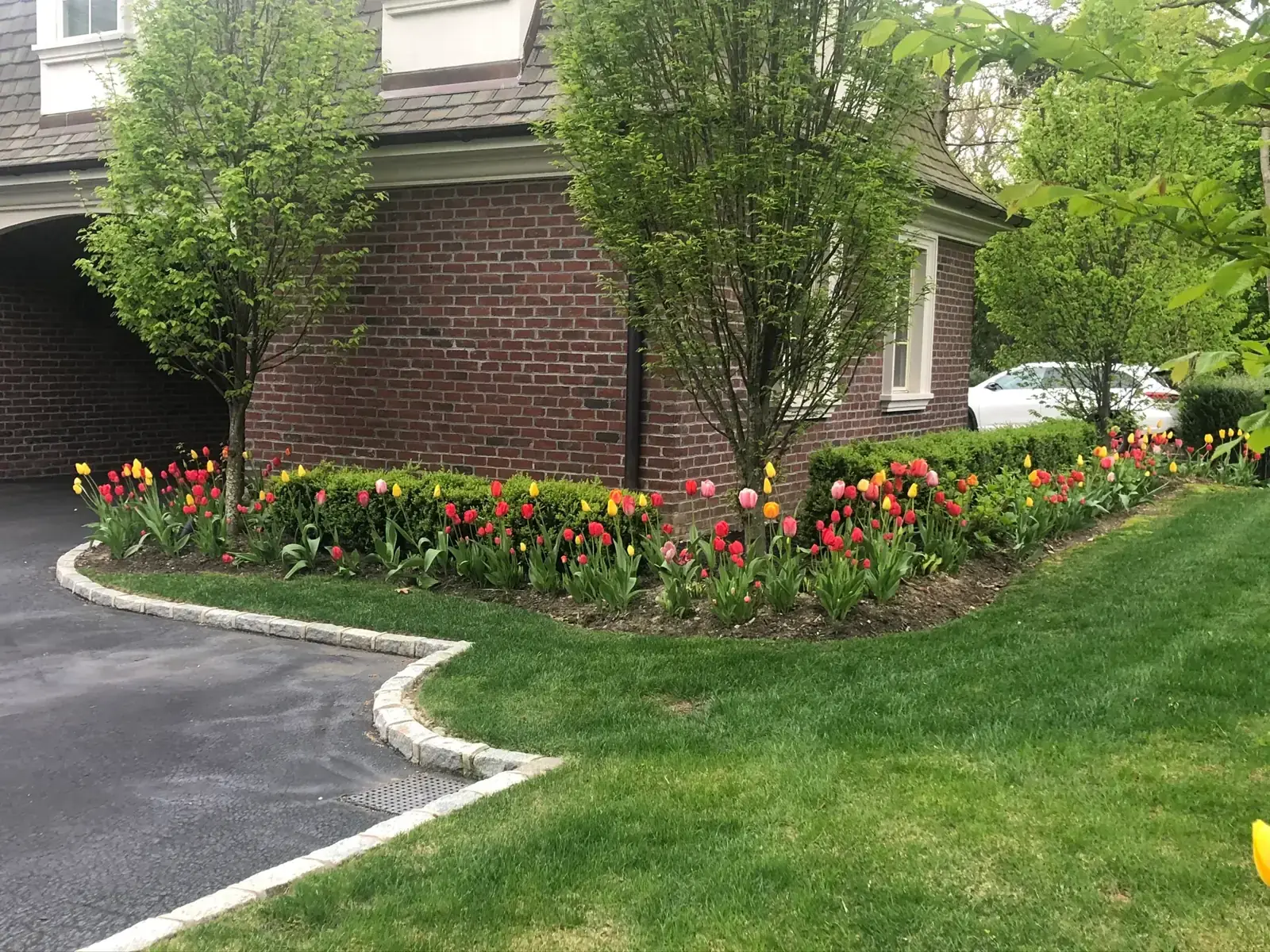
Long Island has four distinct seasons, and great landscape design accounts for all of them. Spring bulbs, summer perennials, fall foliage, and winter evergreen structure, when planned together, make your property look intentional and alive year-round rather than spectacular for six weeks and forgotten the rest of the time. Don't underestimate the value of ornamental grasses, which provide movement and texture through fall and winter.
Water Features as Focal Points
In our experience designing Nassau County landscapes, nothing creates a more memorable outdoor space than water. A koi pond, a pondless waterfall, or even a simple fountain urn introduces movement, sound, and life to a yard that nothing else can replicate. Water features also attract birds and beneficial insects, adding an ecological dimension to the landscape. They become the feature your guests remember and the thing that makes your backyard truly yours.
Don't Neglect Lighting
Landscape lighting extends the usability of your outdoor space into the evening and dramatically changes how the property looks at night. Strategic up-lighting on specimen trees, path lighting along walkways, and submersible lighting in water features create an atmosphere that's completely different from daytime. Well-executed landscape lighting is one of the highest-return improvements you can make to a Nassau County property.
Budget for Installation and Maintenance
A landscape is a living system. Budget not just for installation but for the first few years of establishment: watering during dry spells, annual mulching, pruning, and fertilization. The most beautiful landscapes we've installed have owners who understand that the investment doesn't stop at completion day. Plan for ongoing care or work with a company that offers maintenance programs.
When to Call a Professional
DIY landscaping works for small planting beds and maintenance tasks. But for any project involving grading, drainage, retaining walls, irrigation, lighting, or water features, the design and technical complexity warrants professional involvement. A good landscape designer will save you money by preventing costly mistakes and create a result that adds real value to your property.